Chicken Meat Industry
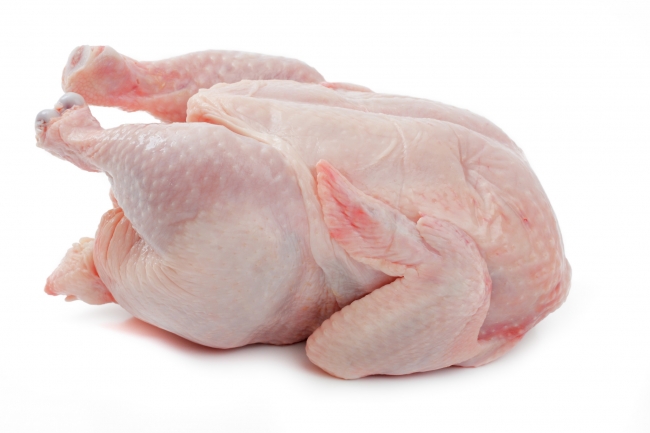
Chicken Meat Industry : Bangladesh
Bangladesh is producing around 0.676 million metric tons of chicken meat annually. The daily production is 1851 metric tons. Numbers of chicken processing and further processing industries have set up in the last 20 years to meet the growing demand.
The local brands producing processed and further processed products include :
- ✓Kazi Farms Ltd.
- ✓Aftab Bahumukhi Farms Ltd.
- ✓BRAC Chicken
- ✓Nourish Poultry Ltd.,
- ✓Golden Harvest and
- ✓Paragon Poultry Ltd.
Other than the local brands, the Thai multinational company CP is also producing processed and further processed chicken products.
Chicken meat production in Bangladesh
According to the Bangladesh Poultry Industries Central Council (BPICC), the annual chicken meat production was :
| Year |
Daily Production (Metric Ton) |
Annual Production (Metric Ton) |
| 2014 | 1510 | 0.551 million |
| 2015 | 1574 | 0.575 million |
| 2016 | 1851 | 0.676 million |
Per capita chicken meat consumption in Bangladesh
The per capita chicken meat consumption in Bangladesh at present (2016) is 4.2 Kg. only. The private entrepreneurs and the government is trying to increase chicken meat intake and taking it to at least 7 kg annually.
| Year | Per capita annual consumption |
| 2014 | 3.5 Kg. |
| 2015 | 3.63 Kg. |
| 2016 | 4.3 Kg. |
| 2017 | 4.5 Kg. |
Chicken meat production & consumption by 2021
BPICC forecasts that the chicken meat production as well as the consumption will be almost double by 2021. The annual Chicken meat production will be approximately 1.204 million metric tons while the per capita chicken meat consumption will be 7.5 Kg.
Raw chicken meat available in Bangladeshi market


Meat-producing chickens : Broiler farms
The chicks are delivered to the actual broiler Grow-Out farms. The houses may be up to 60' x 600' (36000 sq.ft.).[26] One 2006 magazine survey reported a desired 67 foot wide house, with the average 'standard' new house being 45' x 493', with largest being 60' x 504'.[27] One farm complex may have several houses.
typical farms may have four to six houses with 25,000 birds per house. One full-time worker might manage three houses. On average, a new broiler house is about 500 feet long by 44 feet wide and costs about $200,000 equipped.
When the birds are full-grown, they are caught (perhaps with a Chicken harvester) placed in crates, and transported by truck to a processing plant.
In many of the Asian countries live broilers are sold in the wet market and kept inside or outside the chicken shop.
Because of their efficient meat conversion, broiler chickens are also popular in small family farms in rural communities, where a family will raise a small flock of broilers.

Broiler husbandry systems
Indoor broilers
Meat chickens, commonly called broilers, are floor-raised on litter such as wood shavings, peanut shells, and rice hulls, indoors in climate-controlled housing. Under modern farming methods, meat chickens reared indoors reach slaughter weight at 5 to 9 weeks of age. The first week of chickens life they can grow 300 percent of their body size, a nine-week-old chicken can average over 9 pounds in body weight. At nine weeks a hen will average around 7 pounds and a rooster will weigh around 12 pounds, having a nine-pound average.
Broilers are not raised in cages. They are raised in large, open structures known as grow out houses. A farmer receives the birds from the hatchery at one day old. A grow out consist of 5 to 9 weeks according on how big the kill plant wants the chickens to be. These houses are equipped with mechanical systems to deliver feed and water to the birds. They have ventilation systems and heaters that function as needed. The floor of the house is covered with bedding material consisting of wood chips, rice hulls, or peanut shells. In some cases they can be grown over dry litter or compost. Because dry bedding helps maintain flock health, most growout houses have enclosed watering systems (“nipple drinkers”) which reduce spillage.
Keeping birds inside a house protects them from predators such as hawks and foxes. Some houses are equipped with curtain walls, which can be rolled up in good weather to admit natural light and fresh air. Most growout houses built in recent years feature “tunnel ventilation,” in which a bank of fans draws fresh air through the house.
Traditionally, a flock of broilers consist of about 20,000 birds in a growout house that measures 400/500 feet long and 40/50 feet wide, thus providing about eight-tenths of a square foot per bird. The Council for Agricultural Science and Technology (CAST) states that the minimum space is one-half square foot per bird. More modern houses are often larger and contain more birds, but the floor space allotment still meets the needs of the birds. The larger the bird is grown the fewer chickens are put in each house, to give the bigger bird more space per square foot.
Because broilers are relatively young and have not reached sexual maturity, they exhibit very little aggressive conduct.
Chicken feed consists primarily of corn and soybean meal with the addition of essential vitamins and minerals. No hormones or steroids are allowed in raising chickens.
Issues with indoor husbandry
In intensive broiler sheds, the air can become highly polluted with ammonia from the droppings. In this case a farmer must run more fans to bring in more clean fresh air. If not this can damage the chickens' eyes and respiratory systems and can cause painful burns on their legs (called hock burns) and blisters on their feet. Broilers bred for fast growth have a high rate of leg deformities because the large breast muscles causes distortions of the developing legs and pelvis, and the birds cannot support their increased body weight. In cases where the chickens become crippled and can't walk farmers have to go in and pull them out. Because they cannot move easily, the chickens are not able to adjust their environment to avoid heat, cold or dirt as they would in natural conditions. The added weight and overcrowding also puts a strain on their hearts and lungs and Ascites can develop. In the UK, up to 19 million broilers die in their sheds from heart failure each year. In the case of no ventilation due to power failure during a heat wave 20,000 chicken can die in a short period of time. In a good grow out a farmer should sell between 92 and 96 percent of their flock. With a 1.80 to a 2.0 feed conversion ratio. After the marking of birds the farmer must clean out and repair for another flock. A farmer should average 4 to 5 grow outs a year.
Indoor with higher welfare
Chickens are kept indoors but with more space (around 12 to 14 birds per square metre). They have a richer environment for example with natural light or straw bales that encourage foraging and perching. The chickens grow more slowly and live for up to two weeks longer than intensively farmed birds.[citation needed] The benefits of higher welfare indoor systems are the reduced growth rate, less crowding and more opportunities for natural behaviour.[10]
Free-range broilers
Turkeys on pasture at an organic farm
Free-range broilers are reared under similar conditions to free-range egg laying hens. The breeds grow more slowly than those used for indoor rearing and usually reach slaughter weight at approximately 8 weeks of age. In the EU, each chicken must have one square metre of outdoor space. The benefits of free-range poultry farming include opportunities for natural behaviours such as pecking, scratching, foraging and exercise outdoors. Because they grow slower and have opportunities for exercise, free-range broilers often have better leg and heart health.
Organic broilers
Organic broiler chickens are reared under similar conditions to free-range broilers but with restrictions on the routine use of in-feed or in-water medications, other food additives and synthetic amino acids. The breeds used are slower growing, more traditional breeds and typically reach slaughter weight at around 12 weeks of age. They have a larger space allowance outside (at least 2 square metres and sometimes up to 10 square metres per bird). The Soil Association standards indicate a maximum outdoors stocking density of 2,500 birds per hectare and a maximum of 1,000 broilers per poultry house.
Readings:
(https://en.wikipedia.org/wiki/Broiler_industry)
(https://en.wikipedia.org/wiki/Poultry_farming)