Basic Info
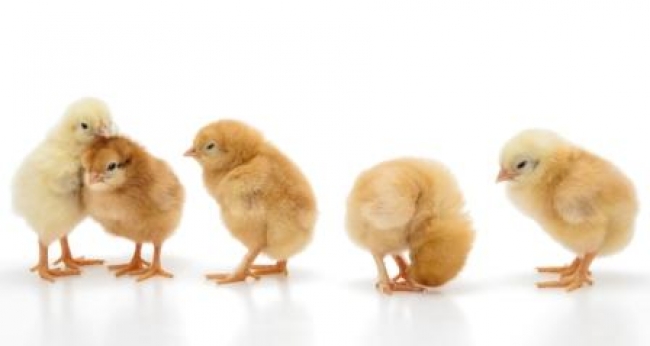
Poultry Industry of Bangladesh
Poultry is an emerging industry in Bangladesh. It is one of the most promising sources of animal protein. The industry achieved a tremendous growth from 1980 to 2007 at the rate of 20%. However, due to Avian Influenza outbreak in 2007, 2009 and 2011, the growth rate fell down drastically. The present growth rate is around 12%-15 %.
The beginning of poultry industry in Bangladesh was not at all rosy. The majority of people did not like poultry eggs and broiler meat. The farmers had to cook recipes and invite guests to taste and promote broiler chicken meat.
In eighties, the total investment was only BDT 15 billion but now it's more than BDT 350 billion. The present growth rate is around 12-15 per cent. This remarkable achievement has been made possible due to the untiring labor and sacrifice of the poultry farmers & entrepreneurs and for the govt. support & cooperation.
The industry is supplying low-cost but supreme quality animal protein, creating job opportunities, reducing poverty, contributing to the national economy and thereby help making a healthy & prosperous Bangladesh.
The industry is moving towards a self-reliant sector from a completely import-dependent sector and meeting cent percent local demand of poultry meat, eggs, day-old chicks and feed. Besides raw chicken meat and eggs, the local companies are also producing further processed products like chicken nuggets, sausage, salami, drumsticks, burger, samosa, meatballs, and many other delicious packaged and frozen foods.
Memorable milestones
* The industry started its journey in the early sixties
* Hybrid poultry birds were first imported in 1935
* In 1947, there were only 6 poultry farms.
* In 1964, the first private-owned commercial farm- 'Eggs & Hens' was established.
* Biman Poultry Complex', the first government-owned farm was established after the liberation war.
* Commercialization in poultry sector started in 1980s.
* Rapid growth was on board in the nineties.
* The Parent Stock (PS) Farm, in private sector, was first established in the early nineties.
* Poultry industry was declared as an agro-based industry in 1994.
* Bangladeshi poultry products entered into the export market in 2005.
* Avian Influenza epidemic caused a fatal damage to the industry for the first time in 2007.
* Approximately sixty per cent poultry farms were shut down.
Investment:
The present investment is above BDT 350 billion, which is expected to reach BDT 630 billion by 2030.
Employment
Poultry industry is considered as the 2nd largest job creator after the Readymade Garments Industry. Around 6 million people are directly & indirectly involved in this sector. Approximately 40 per cent of the total workforce are women.
The present government has introduced a new concept "one home one farm" (Ekti Bari Ekti Khamar) with an aim to reduce the unemployment problems. The 7th five-year plan of the government of Bangladesh (GoB) claimed that if the planned activities under 'Vision 2021' could be achieved, around 11.2 million people would be employed in livestock sector. However, By 2020, participation of women in livestock activities would be raised to 50% and additional 1.5 million women would be directly involved in livestock activities. This would be further augmented involving additional 4.4 million women by 2020. Nevertheless to say that the expectations to generate more employment in livestock sector is mainly dependent on poultry sector.
Poultry Industry : at-a-glance
- No. of commercial farms : 90 thousand to 0.1 million
- No. of registered GP farms : 18 (9 companies)
- No. of registered PS farms : 299 (large & small)
- Breeder Farms registered with BAB : 100
- No. of registered feed mills : 290 (DLS)
- No. of registered Broiler Farms : 56,553
- No. of registered Layer Farms : 20,868
- Feed mills : FIAB members : 96
- Un registered feed mills as per DLS : More than 200
- No. of medicine companies : 30 (approx)
- Present investment : BDT 400 billion+
- Growth rate : 12% (average)
- Contribution in GDP : 1.5-1.6 Per cent (Livestock GDP : 2.5 percent (as per BIDS)
- Direct employment generated : 2.5 million (approx.)
- Direct & Indirect employment : 6 million (approx.)
- Women employment : 40% of the total workforce
Poultry Production
- Total Commercial Poultry Meat Production (Broiler, Sonali, Cock) : 1.26 Million MT (annually)
- Daily Commercial Poultry Meat Production in Bangladesh (Broiler, Sonali, Cock) : 3440 Metric Tons
- Total Commercial Egg production in the country (all type): 17.85 Billion (annually)
| Year | Production (billion/year) |
| 2019-20 | 17.36 |
| 2018-19 | 17.11 |
| 2017-18 | 15.52 |
| 2016-17 | 14.98 |
| 2015-16 | 11.91 |
| 2014-15 | 11 |
| 2013-14 | 10.17 |
| 2012-13 | 7.62 |
| 2011-12 | 7.3 |
| 2010-11 | 6.08 |
- Daily Commercial Egg Production (all type) : 48.90 million
Egg production increases 2.86 times by number during last 10 years. Thus per capita egg consumption in Bangladesh is 104.23 number.
Annual Commercial Feed production
- Total Commercial Feed Production : 7.50-8.05 Million Metric Ton (Annually)
- Poultry Feed Production : 5.50 Million Metric Ton
- Fish Feed Production : 1.80 Million Metric Ton
- Cattle Feed Production : 0.75 Million Metric Ton
- Total DOC production : 14.8 millions (weekly) including Broiler and Layer
- Industry bi-products : Organic fertilizer, biogas & electricity
Daily Egg Production (all type): 40 Million
Day-old-Chicks Production : Weekly Production
- Broiler DOC : 16-17 Million (Weekly)
- Layer DOC : 1.55 Million (Weekly)
- Sonali DOC: 4.50 Million (Weekly)
Poultry Consumption
- Annual Per Capita Poultry Meat (Chicken) consumption : 6.7 Kg (approx.)
- Annual Per capita Egg Consumption (adding commercial & non-commercial production) : 105 (as per DLS.)
Poultry Industry in Covid-19
.................................
Government Information
The Bangladesh Bureau of Statistics (BBS) provides the following information about the Poultry Industry in Bangladesh:
Household Income & Expenditure Survey 2016
Bangladesh Bureau of Statistics (BBS) in its latest Household Income and Expenditure Survey (HIES) 2016 report said that the daily per capita consumption of major meat like chicken, duck and beef as well as fish and egg has increased compared to that in 2010.
Among those protein items, intake of eggs and chickens has jumped significantly over the last six years, the HIES 2016 data showed.
According to the statistics, per capita egg consumption has increased to 13.58 grams daily in 2016 from only 7.20 grams in 2010. However, the daily per capita egg consumption was only 5.27gm in 2000 and 5.15gm in 2005.
Similarly, chicken and duck meat consumption has picked up to 17.33gm per day in 2016 compared to 11.22gm in 2010. In 2000, per capita chicken and duck intake was 4.50gm which increased to 6.85gm daily in 2005.
The HIES 2016 data also showed that per capita daily beef consumption has increased to 7.54gm in 2016 from 6.84gm in 2010 while fish consumption to 62.58gm in 2016 from 49.50gm in 2010. However, per capita mutton consumption decreased a little bit to 0.55gm daily in 2016 from 0.59gm six years ago in 2010.
Per capita availability of Chicken & Duck for domestic consumption
Production of Chicken and Duck
1997-98 : 144.97 Million Tons
1998-99 : 154.00 Million Tons
1999-2000 : 163.00 Million Tons
2000-01 : 173.00 Million Tons
2001-02 : 311.00 Million Tons
2002-03 : 364.00 Million Tons
2003-04 : 427.00 Million Tons
2004-05 : 544.00 Million Tons
2005-06 : 490.00 Million Tons
2006-07 : 735.30 Million Tons
2007-08 : 748.20 Million Tons
2008-09 : 789.00 Million Tons
2009-10 : 89.40 Million Tons
2010-11 :580.40 Million Tons
2011-12 : 261.30 Million Tons
(Source: Household Income & Expenditure Survey)
Production of Egg
Period |
Fowls(Million Nos) |
Duck(Million Nos) |
Total(Million Nos) |
Per Capita Consumption |
|
1997-98 |
1826 |
1127 |
2953 |
23 |
|
1998-99 |
2401 |
1521 |
3926 |
30 |
|
1999-2000 |
2535 |
1642 |
4177 |
32 |
|
2000-01 |
2673 |
1773 |
4446 |
34 |
|
2001-02 |
2359 |
1905 |
4264 |
32 |
|
2002-03 |
4960 |
2066 |
7026 |
52 |
|
2003-04 |
5807 |
2230 |
8037 |
58 |
|
2004-05 |
7403 |
2408 |
9811 |
71 |
|
2005-06 |
8767 |
2599 |
11366 |
82 |
|
2006-07 |
11094 |
3117 |
14211 |
101 |
|
2007-08 |
11106 |
3366 |
144472 |
102 |
|
2008-09 |
11534 |
3634 |
15168 |
105 |
|
2009-10 |
12383 |
3902 |
16285 |
111 |
|
2010-11 |
13061 |
4116 |
17177 |
115 |
|
2011-12 |
3147 |
4114 |
7261 |
48 |
(Source: Household Income & Expenditure Survey)
Food Intake (Gram Per Capita Per Day)
Item |
HIES 2010 |
HIES 2005 |
||||
Total |
Rural |
Urban |
Total |
Rural |
Urban |
|
|
Rice |
416.01 |
441.6 |
344.2 |
439.6 |
459.7 |
378.5 |
|
Fish |
49.5 |
45.8 |
59.9 |
42.1 |
39.7 |
49.6 |
|
Meat |
19.0 |
14.7 |
33.3 |
20.8 |
17.6 |
30.7 |
|
Egg |
7.20 |
5.80 |
10.9 |
5.2 |
4.4 |
7.4 |
|
Milk & Milk Product |
33.7 |
31.8 |
39.2 |
32.4 |
31.0 |
36.6 |
|
Protein |
66.26 |
65.24 |
69.11 |
62.52 |
61.74 |
64.88 |
(Household Income and Expenditure Survey-HIES)
Major Food Items Intake (Per Capita Per Day/Grams)
Food Items |
HIES 2010 |
HIES 2005 |
HIES 2000 |
HIES 1995-96 |
||
Poor |
Non-poor |
Total |
||||
|
Rice |
406.19 |
420.52 |
416.01 |
439.64 |
458.54 |
464.3 |
|
Beef |
1.55 |
9.27 |
6.84 |
7.78 |
8.30 |
6.6 |
|
Mutton |
0.11 |
0.83 |
0.60 |
0.59 |
0.49 |
1.0 |
|
Chicken/Duck |
4.11 |
15.09 |
11.22 |
6.85 |
4.50 |
4.0 |
|
Eggs |
3.40 |
9.02 |
7.25 |
5.15 |
5.27 |
3.2 |
|
Fish |
31.16 |
57,81 |
49.41 |
42.14 |
38.45 |
43.8 |
|
Milk & Milk Product |
12.18 |
43.63 |
33.72 |
32.40 |
29.71 |
32.6 |
(Household Income and Expenditure Survey-HIES)
Average Per Capita Per Day Intake of Major Food Items (in Grams)
Item |
HIES 2010 |
HIES 2005 |
||||
National |
Rural |
Urban |
National |
Rural |
Urban |
|
|
Cereals |
463.9 |
485.6 |
402.9 |
469.2 |
485.6 |
419.3 |
|
Rice |
416.01 |
441.6 |
344.2 |
439.6 |
459.7 |
378.5 |
|
Fish |
49.5 |
45.8 |
59.9 |
42.1 |
39.7 |
49.6 |
|
Meat, Poultry, eggs |
26.2 |
20.5 |
42.2 |
20.8 |
17.6 |
30.7 |
|
Mutton |
0.6 |
0.5 |
0.9 |
0.6 |
0.6 |
0.7 |
|
Beef |
6.8 |
4.7 |
12.5 |
7.8 |
6.4 |
12.0 |
|
Chicken/Duck |
11.2 |
9.0 |
17.4 |
6.8 |
5.8 |
10.1 |
|
Eggs |
7.20 |
5.80 |
10.9 |
5.2 |
4.4 |
7.4 |
|
Milk & Milk Product |
33.7 |
31.8 |
39.2 |
32.4 |
31.0 |
36.6 |
(Household Income and Expenditure Survey-HIES)
Per Capita Per Day Intake of Protein (Grams) by Residence
Year |
Residence |
||
National |
Rural |
Urban |
|
|
2010 |
66.26 |
65.24 |
69.11 |
|
2005 |
62.52 |
61.74 |
64.88 |
|
2000 |
62.50 |
61.88 |
64.96 |
|
1995-96 |
64.96 |
64.45 |
67.50 |
|
1991-92 |
62.72 |
62.29 |
65.49 |
(Household Income and Expenditure Survey-HIES 1991/92 to 2010)
Production of Milk, Meat and Eggs (2008-09 to 2018-19)
Product |
Unit |
Fiscal Year |
||||||||||
2008-09 |
2009-10 |
2010-11 |
2011-12 |
2012-13 |
2013-14 |
2014-15 |
2015-16 |
2016-17 |
2017-18 |
2018-19 |
||
Milk |
Lakh Metric Ton |
22.90 |
23.70 |
29.50 |
34.60 |
50.70 |
60.92 |
69.70 |
72.75 |
92.83 |
94.01 |
99.23 |
Meat |
Lakh Metric Ton |
10.80 |
12.60 |
19.90 |
23.30 |
36.20 |
45.21 |
58.60 |
61.52 |
71.54 |
72.06 |
75.14 |
Egg |
Crore number |
469.61 |
574.24 |
607.85 |
730.38 |
761.74 |
1016.80 |
1099.52 |
1191.24 |
1493.31 |
1552.00 |
1711 |
Source: Department of Livestock Services (DLS, GoB)
Livestock Economy at a Glance
Source: Department of Livestock Services (DLS, GoB)
Table 1. Livestock population of Bangladesh (in lakh number)
Livestock Species |
2008-09 |
2009-10 |
2010-11 |
2011-12 |
2012-13 |
2013-14 |
2014-15 |
2015-16 |
2016-17 |
2017-18 |
2018-19 |
|
Cattle |
229.76 |
230.51 |
231.21 |
231.95 |
233.41 |
234.88 |
236.36 |
237.85 |
239.35 |
240.86 |
242.38 |
|
Buffalo |
13.04 |
13.49 |
13.94 |
14.43 |
14.50 |
14.57 |
14.64 |
14.71 |
14.78 |
14.79 |
14.86 |
|
Sheep |
28.77 |
29.77 |
30.02 |
30.82 |
31.43 |
32.06 |
32.70 |
33.35 |
34.01 |
34.68 |
35.37 |
|
Goat |
224.01 |
232.75 |
241.49 |
251.16 |
252.77 |
254.39 |
256.02 |
257.66 |
259.31 |
261.00 |
262.67 |
Total Ruminant |
495.58 |
506.52 |
516.84 |
528.36 |
532.11 |
535.90 |
539.72 |
543.57 |
547.45 |
551.33 |
555.28 |
|
Chicken |
2213.94 |
2280.35 |
2346.86 |
2428.66 |
2490.11 |
2553.11 |
2617.70 |
2683.93 |
2751.83 |
2821.45 |
2892.83 |
|
Duck |
412.34 |
426.77 |
441.20 |
457.00 |
472.54 |
488.61 |
505.22 |
522.40 |
540.16 |
558.53 |
577.52 |
Total Poultry |
2626.28 |
2707.12 |
2788.06 |
2885.66 |
2962.64 |
3041.72 |
3122.93 |
3206.33 |
3292.00 |
3379.98 |
3470.35 |
Total Livestock |
3121.86 |
3213.64 |
3304.90 |
3414.02 |
3494.75 |
3577.62 |
3662.65 |
3749.90 |
3839.45 |
3931.31 |
4025.63 |
Table 2. Contribution of Livestock and Poultry in the National Economy of Bangladesh (2018-19) p
|
Contribution of Livestock in Gross Domestic Product (GDP) ( Constant Prices) |
1.47% |
|
GDP growth rate of Livestock ( Constant Prices) |
3.47% |
|
GDP volume (Current prices) (Crore Taka) |
43212 |
|
Share of Livestock in Agricultural GDP (Current prices) |
13.46 |
|
Employment (Directly) |
20 % |
|
Employment (Partly) |
50 % |
Table 3. Production of Milk, Meat and Eggs
Products |
Unit |
Fiscal Year |
||||||||||
2008-09 |
2009-10 |
2010-11 |
2011-12 |
2012-13 |
2013-14 |
2014-15 |
2015-16 |
2016-17 |
2017-18 |
2018-19 |
||
|
Milk |
Lakh Metric Ton |
22.90 |
23.70 |
29.50 |
34.60 |
50.70 |
60.92 |
69.70 |
72.75 |
92.83 |
94.01 |
99.23 |
|
Meat |
Lakh Metric Ton |
10.80 |
12.60 |
19.90 |
23.30 |
36.20 |
45.21 |
58.60 |
61.52 |
71.54 |
72.06 |
75.14 |
|
Egg |
Crore number |
469.61 |
574.24 |
607.85 |
730.38 |
761.74 |
1016.80 |
1099.52 |
1191.24 |
1493.31 |
1552.00 |
1711 |
Table 4. Demand, production, availability and deficiency of milk, meat and eggs (2018-19)
Products |
Demand |
Production |
Availability |
|
Milk |
152.02 Lakh Metric Ton (250 ml/day/head) |
99.23 Lakh Metric Ton |
165.07 (ml/day/head) |
|
Meat |
72.97 Lakh Metric Ton (120 gm/day/head) |
75.14 Lakh Metric Ton |
124.99 (gm/day/head) |
|
Egg |
1732.64 Crore number (104 numbers/year/head) |
1711 Crore numbers |
103.89 (numbers/year/head) |
*Estimated population of the country: 16 crore 66 lakhs ( 30 June, 2019) |
|||
Table 5. Livestock contribution in GDP
2009-10 |
2010-11 |
2011-12 |
2012-13 |
2013-14 |
2014-15 |
2015-16 |
2016-17 |
2017-18 |
2018-19p |
|
|
GDP (Base: 2005-06)* |
2.06 |
1.98 |
1.90 |
1.84 |
1.78 |
1.73 |
1.66 |
1.60 |
1.54 |
1.47 |
|
Growth rate of GDP |
2.51 |
2.59 |
2.68 |
2.74 |
2.83 |
3.10 |
3.21 |
3.32 |
3.40 |
3.47 |
*GDP calculated at constant price (Source: BBS); *P denotes Provisional; Prepared by Dr. Hossan Md. Salim, LE Section, DLS.
Source: Department of Livestock Services (DLS, GoB)
Poultry Production Categories

Basically four types of poultry rearing are found in Bangladesh:
(2) Semi-scavenging,
(3) Commercial farming system
(4) Contract/ integrated farming system.
Bangladesh is moving fast towards the 'Commercial' and 'Contract or Integrated Farming' from the Semi-scavenging system. The poultry farming & management, bio-security, supply chain management, etc. have got a significant development over the last three decades. World's latest technologies are being used.
Bio-security & Vaccination
Good hygiene practices are in place to keep the poultry safe from diseases and control spreading of germs; especially to keep out exotic poultry diseases like avian influenza and Newcastle, zoonotic diseases like salmonella. Three major components of bio-security- Isolation, Traffic control and Sanitation are in practice.

The main objectives of setting up of a strong bio-security at farm level are:
- To supply safe poultry meat and egg to the Bangladeshi consumers,
- To secure the investment and
- To set standards for export.
Vaccination is allowed only when the registered veterinary doctors prescribe. The government of Bangladesh approves use of Avian Influenza (AI) vaccine after an experiment took place in some selective poultry halves. With this decision the poultry industry has been almost AI free since the last two years (from 2013).
Antibiotic use in not allowed
Antibiotic use in poultry feed is strictly prohibited in Bangladesh. Years back the poultry entrepreneurs raised strong voices against the use of harmful antibiotics for the sake of public health. To respond to the call a government order was issued which prohibited use of all sorts of antibiotic including the safe & essential antibiotics.
Tax free sector become a tax imposed sector:

The poultry industry in Bangladesh had been enjoying Tax Exemption facilities since June 2015. The industry could expand rapidly due to government's friendly policies and treatment as a thrust sector and as an agro-based industry.
From July 2015 tax exemption facilities were removed as a result Advanced Income Tax (AIT), Customs Duties on import, Value Added Tax (VAT) and other direct & indirect taxes have been imposed.
Forecasting 2021
- Investment : BDT 630 billion
- DOC production : 25 million (weekly)
- Egg production : 15 billion (annual)
- Chicken meat production : 2 million MT (annual)
- Feed production : 8 million MT (annual)

Roadmap 2025
- ✓To be the number one supplier of animal protein at an affordable cost.
- ✓To turn into the largest agricultural-based industry
- ✓To achieve Nutrition Sensitive Economic Growth
- ✓To create approximately 10 million direct & indirect jobs
- ✓To attain international standards in safe poultry production.
- ✓To establish export-oriented industries
- ✓To start exporting poultry and poultry products
- ✓To achieve 3% - 4% contribution to GDP.